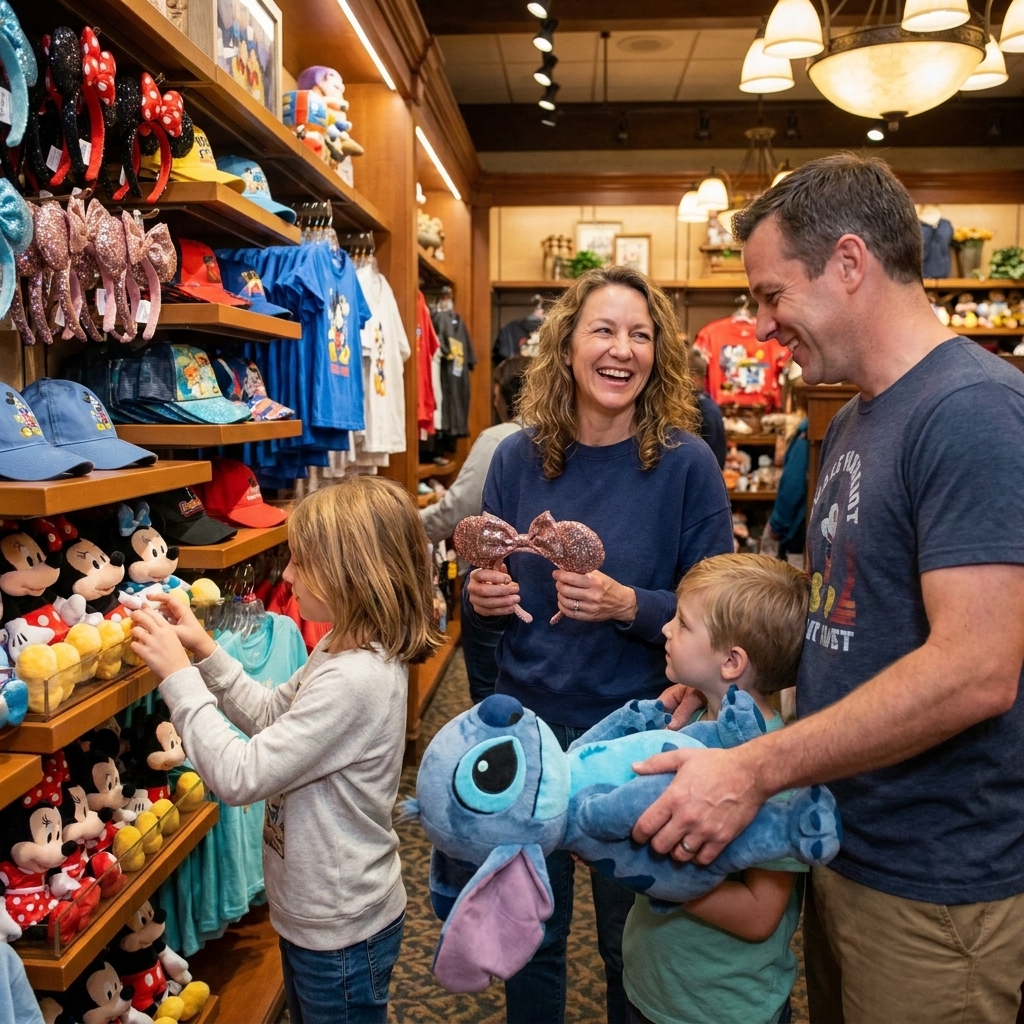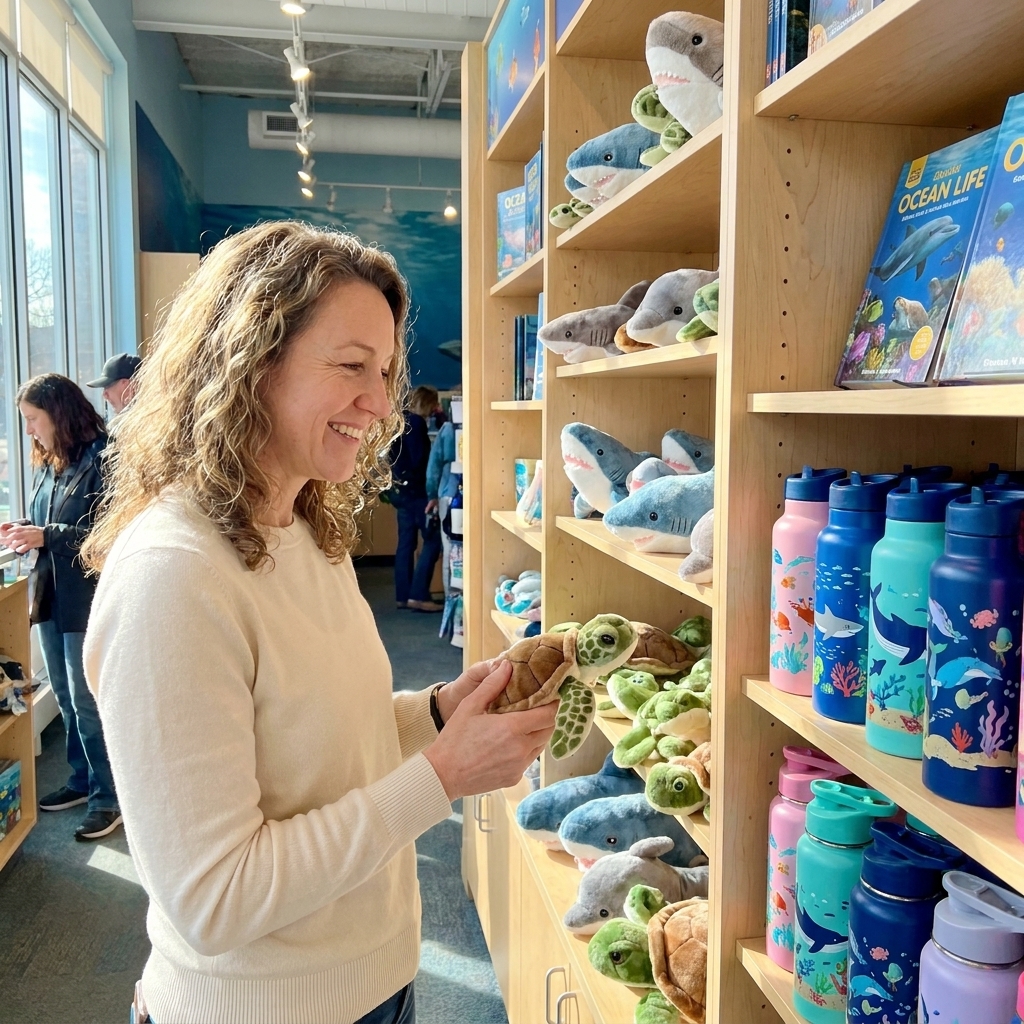
I love a good souvenir. I also love not hearing that heartbreaking little tink tink sound in my suitcase that says, “Congrats, you just turned your hand-blown ornament into confetti.” Whether you picked up a glass figurine at a theme park shop, a ceramic mug from a zoo café, a framed print from an interactive museum, or a limited-edition collectible from an attraction merch drop, the goal is the same: get it home in one piece.
This is my go-to, hospitality-coordinator-approved system for safely packing and shipping fragile souvenirs. For years, I coordinated VIP gift logistics for events, which meant lots of fragile, high-value items and very little room for errors. This is that same checklist, just adapted for real travel life.
Step 1: Ship or carry on
Before you buy extra tape or hunt down a shipping store, make one decision: ship it or take it with you. The safest option is often the one with the fewest handoffs.
Carry-on is usually best for
- Small, high-value items (jewelry, limited-edition pins, small figurines, watch boxes).
- Anything sentimental that would ruin your week if it disappeared.
- Truly fragile pieces that you can cushion and keep under your seat.
Shipping is usually best for
- Heavy or oversized items (large ceramics, bulky snow globes, framed art bigger than your carry-on).
- Multiple fragile items you cannot safely separate in luggage.
- Liquids or restricted items that are a hassle for air travel rules.
My rule: If it is expensive and small enough to control, I carry it. If it is heavy, awkward, or I bought too much (it happens), I ship.
Quick airport note: Security may need to inspect your bag, which can mean items get shifted or unwrapped. Pack so it can be rewrapped fast and avoid complicated tape cocoons if you know you will be carrying it through screening.
Step 2: Ask the shop first
Attractions and museum stores often have packing materials behind the counter, and some will ship for you. Before you walk out, ask:
- “Do you have the original box or molded insert for this?”
- “Can you double-box it for me?”
- “Do you offer shipping, and is it insured?”
- “If it breaks, what is the return or claim process?”
Even if they cannot ship, they may give you extra paper, bubble wrap, or a sturdy box. That alone can save your souvenir.
Step 3: Get supplies
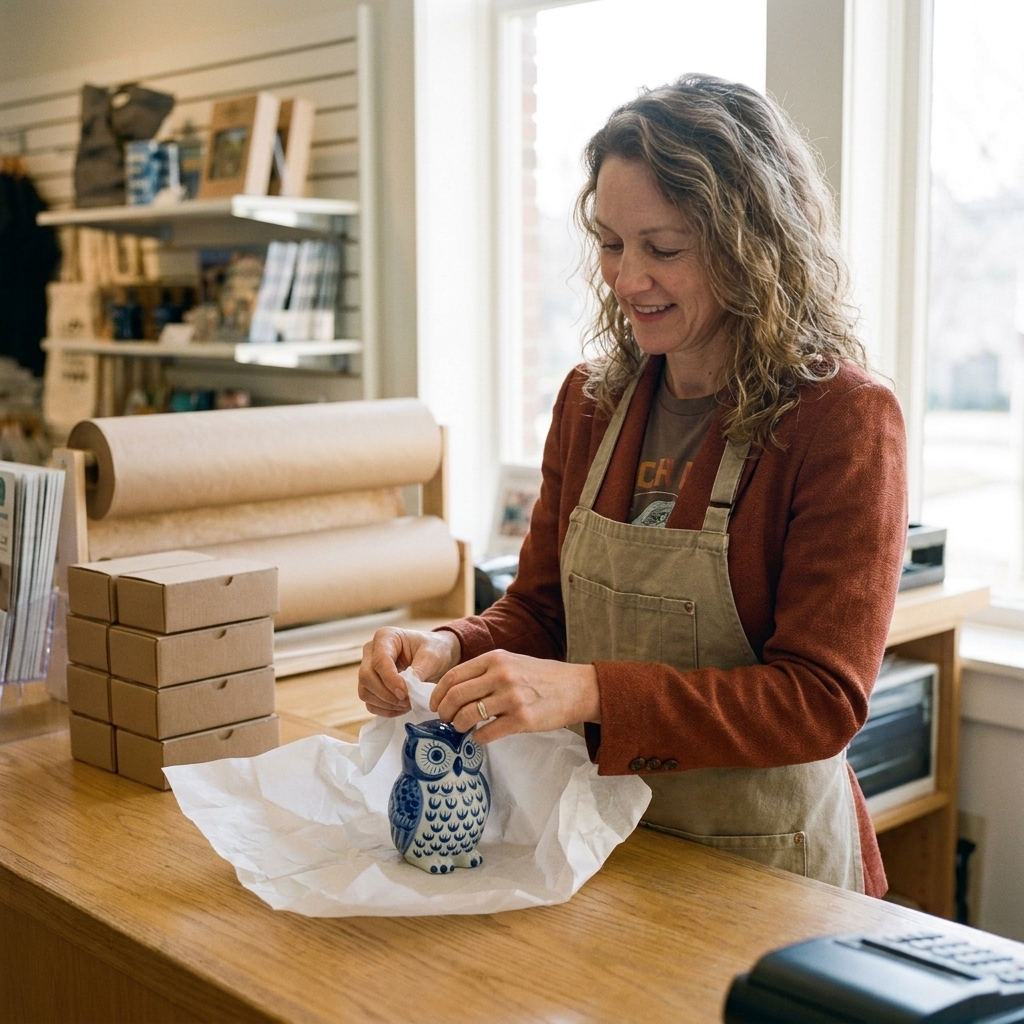
You do not need a professional warehouse setup, but you do need the right materials. Here is the packing kit I build on the road.
Must-haves
- Bubble wrap (small bubbles for delicate surfaces, larger bubbles for cushioning).
- Packing paper (better than newspaper, which can transfer ink).
- Strong packing tape (2-inch wide is ideal).
- Two sturdy boxes (one that fits the item, plus a larger outer box for double-boxing).
Nice-to-haves
- Foam sheets or foam corners (great for frames and flat art).
- Air pillows or packing peanuts (best for filling the outer box gaps).
- Zip-top bags (for tiny parts, certificates of authenticity, extra batteries).
- “Fragile” stickers (helpful, but not a force field).
- A marker for labeling and drawing arrows.
Hotel hack: If you are stuck, ask housekeeping for extra towels or request a spare roll of toilet paper. Soft textiles can be a temporary buffer inside luggage, but for shipping you still want real padding like bubble wrap and paper.
Step 4: Prep the item
This step is where most breakage is prevented. Your goal is to stop three enemies: movement, pressure, and sharp impact.
Glass, ceramics, resin
- Wrap it in clean packing paper first to protect the finish.
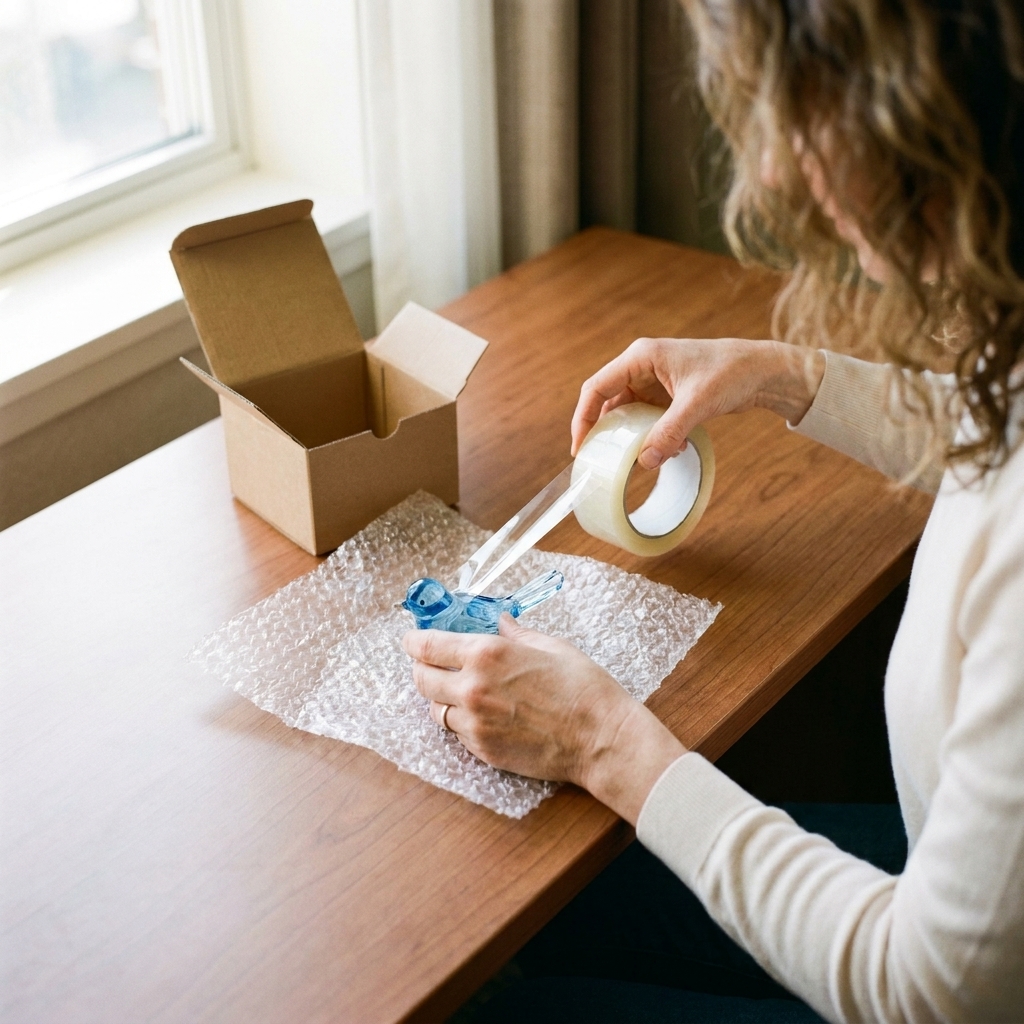
- Add bubble wrap next, aiming for 2 to 3 snug layers (more for heavy pieces), taped so it cannot unravel.
- Protect weak points (handles, stems, protruding pieces) with extra padding “donuts.”
Snow globes
- Bag it first in a zip-top or plastic bag in case of leaks.
- Wrap extra around the globe and the base separately if possible.
- Keep it upright and mark the box accordingly.
TSA heads-up: Snow globes are often treated like liquids or gels. If the liquid portion is over 3.4 oz (100 ml), it may not be allowed in carry-on, and policies can vary by airport and country. When in doubt, plan to check it or ship it, and pack expecting it could be inspected.
Framed art, prints
- Protect the face with a clean sheet of paper or foam (never tape directly to glass).
- Reinforce corners with foam corners or folded cardboard.
- Sandwich flat art between two rigid boards before boxing.
Collectibles with original packaging
- Keep the original packaging if it is part of the value.
- Do not rely on it alone. You still need an outer shipping box and cushioning.
- Separate accessories into a labeled bag so they do not rattle around and scratch anything.
Heat and pressure note: Items with liquid, wax, or fragrance (snow globes, perfume, candles) can leak or soften in hot cars, sunny windows, or long transit delays. Bag them, pad them, and avoid leaving the box in heat whenever you can.
Step 5: Do the shake test
This is the simplest quality check you can do in a hotel room. If you do this one thing, you will prevent most souvenir tragedies.
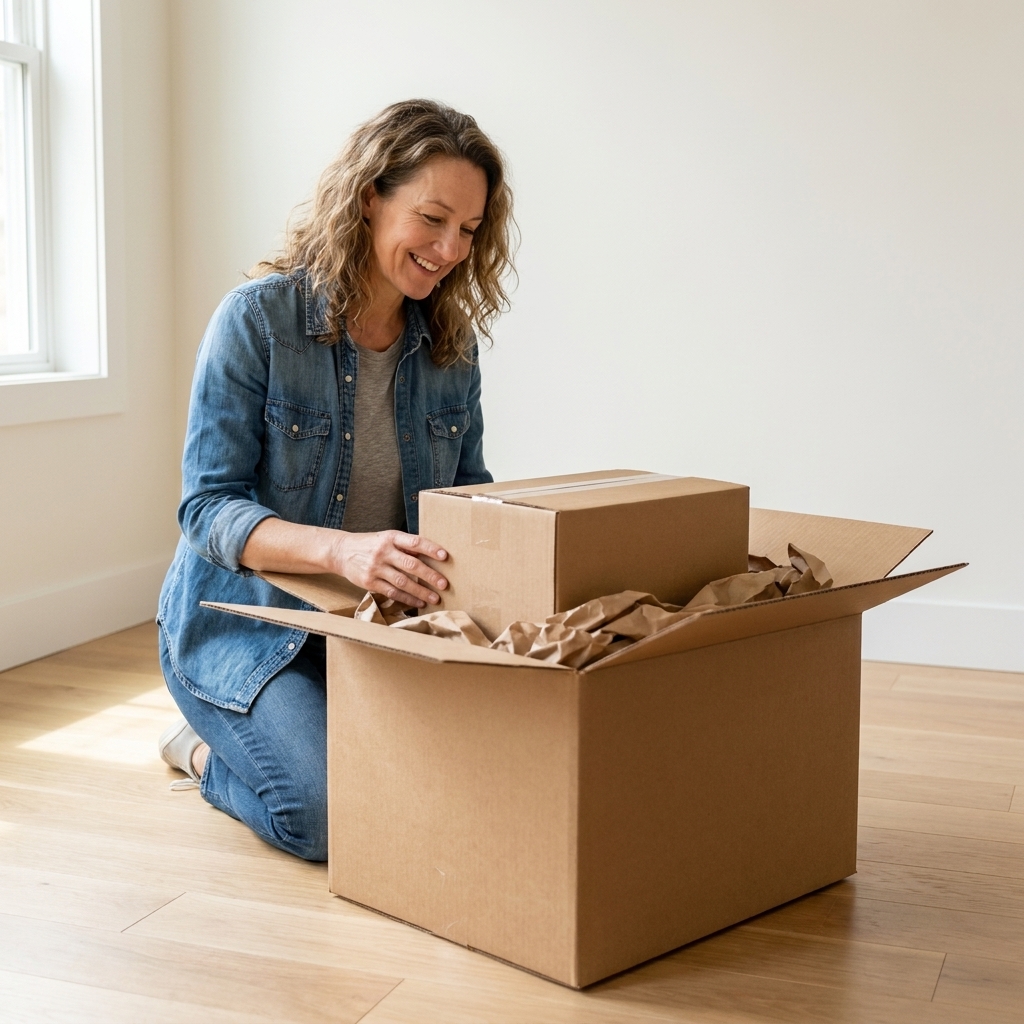
Pack the inner box
- Cushion the bottom with about 2 inches of crumpled packing paper or bubble wrap (more for heavier items).
- Place the wrapped item in the center, never touching box walls.
- Fill every gap firmly with packing paper. No empty corners.
- Close and gently shake. If you feel movement, reopen and add more fill.
Double-box it
- Cushion the outer box bottom with about 2 inches of padding.
- Set the sealed inner box inside.
- Fill all sides and the top so the inner box cannot shift.
- Seal all seams with packing tape using an “H” pattern on top and bottom.
What the shake test should feel like: Nothing. No shifting, no sliding, no thud. Movement dramatically increases the chance of damage.
Step 6: Label smart
Labels matter, but they are not magic. “Fragile” can help a little, but solid packing does the real work.
- Place a printed label on the largest flat side.
- Protect the label from moisture by taping around the edges or using a label pouch. If you tape over it, keep barcodes flat and clearly readable since glossy tape can sometimes cause scanning glare.
- Add a duplicate label inside the box with your name, phone, and destination address in case the outer label gets damaged.
- Mark “This Side Up” if orientation matters, especially for items with liquid.
Step 7: Shipping and insurance
When it comes to fragile souvenirs, your shipping decision is really about speed, handling, and coverage.
What to prioritize
- Tracking with frequent scans.
- Insurance for the full replacement value.
- Signature confirmation for high-value collectibles.
- Shortest reasonable transit time if the item is fragile or temperature-sensitive.
Insurance tips
- Keep the receipt, and take a photo of it on your phone.
- Photograph the item before packing and during packing, including the cushioning and the sealed box.
- Save proof of value for collectibles, like the tag, certificate, or order confirmation.
Small but important disclaimer: Carrier policies vary by country and service level. Some claims require proof of value and proof you packed to their guidelines, and some carriers limit coverage for certain fragile items. If the item is truly irreplaceable, take two minutes to skim the carrier’s fragile-item and insurance rules before you ship.
Step 8: What not to do
I have seen all of these mistakes in real life, including during corporate gifting where budgets were very much not tiny. Avoid them and you are already ahead.
- Do not ship in a gift bag or thin retail box alone.
- Do not use clothing as your only padding for shipping. It compresses.
- Do not let items touch the box walls. Corners take the hits.
- Do not leave empty space. Empty space becomes momentum.
- Do not use newspaper for light-colored items unless you want surprise ink smudges.
- Do not tape directly to delicate finishes like painted ceramics or framed surfaces.
Special scenarios
Theme parks
If it is limited-edition merch, treat it like a collectible even if it looks sturdy. Keep packaging pristine, avoid scuffs, and separate anything that can rub during transit. If your attraction offers package pickup or hotel delivery, use it so you are not hauling breakables through a full day of rides.
Zoo and aquarium glassware
Mugs and glasses love to crack at the handle or rim. Wrap handles extra, and pack so nothing presses on them from the outside. If you are flying, carry-on is often safer than checking a bag that will be stacked under heavy suitcases.
Art markets and museum prints
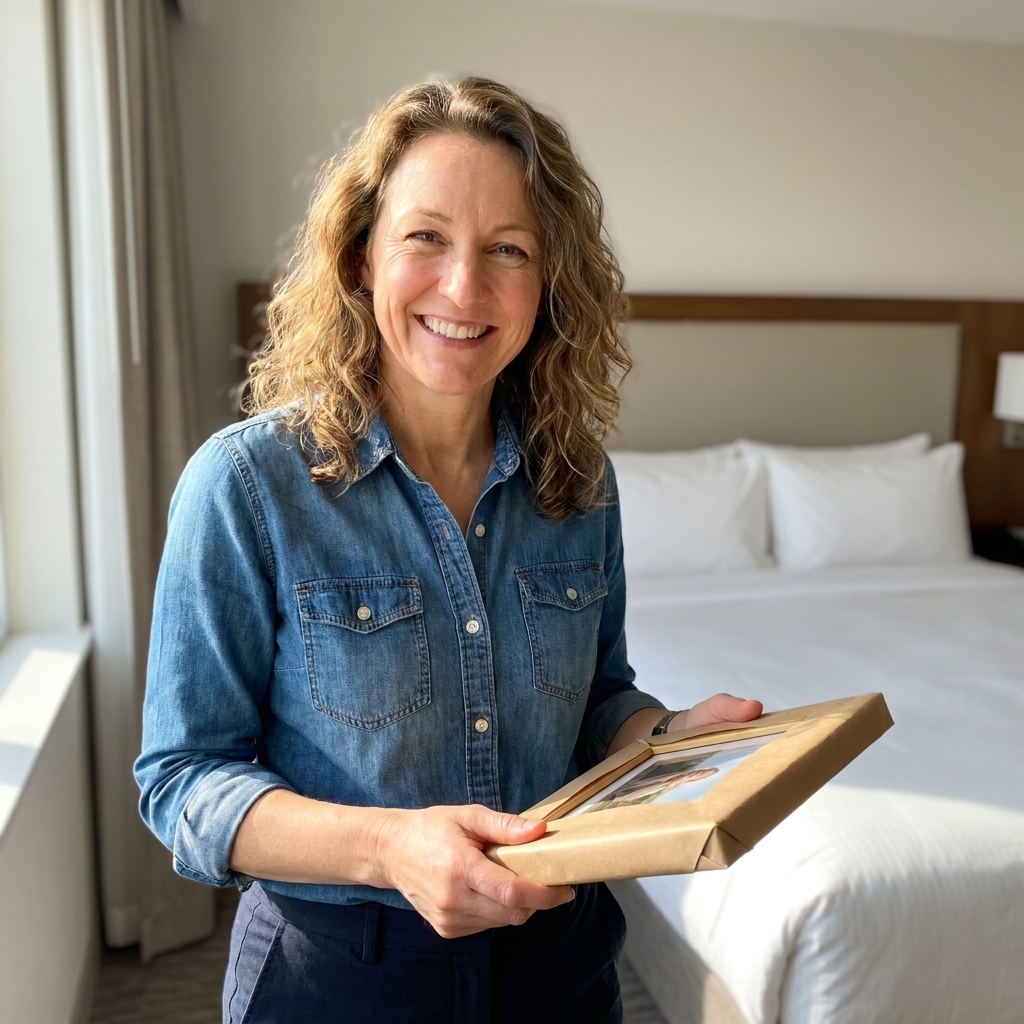
Flat items get bent more often than they break. Ask for rigid backing at the point of purchase, then add your own: two pieces of cardboard slightly larger than the print, taped together as a sandwich.
International shipping
If you are mailing souvenirs across borders, plan for an extra five minutes of paperwork.
- Customs forms: You will usually need to describe the contents, declare a value, and mark whether it is a gift or merchandise.
- Duties and taxes: The recipient may owe import fees depending on the country and declared value.
- Build in time: Customs delays are normal, so pack for a longer journey and consider a sturdier outer box.
Quick checklist
- Receipt photographed and saved
- Item photographed before packing
- Packing paper layer (scratch protection)
- 2 to 3 bubble wrap layers (aim for more if heavy)
- Weak points reinforced (handles, corners, stems)
- Inner box cushioned and shake-tested
- Inner box double-boxed with a 2-inch buffer zone
- Label protected, barcode readable, duplicate label inside
- Tracking plus insurance selected
FAQ
Should I mark the box “Fragile”?
You can. Think of it as a bonus, not a plan. Preventing movement and building a cushion zone on all sides is what actually reduces damage.
Ship from the attraction or ship later?
If the shop offers professional packing and insured shipping, it can be a great option, especially for art and glass. If not, I usually prefer shipping from a shipping store where I can choose a sturdier box and double-box everything.
How do I pack multiple fragile items together?
Individually wrap each item, then pack them so they cannot touch each other. Use firm fill between items, and consider separate inner boxes inside one outer box if you have a mix of shapes and weights.
Can I use packing peanuts?
Yes, but they are better for filling space in the outer box. For the inner box around the item, I prefer paper and bubble wrap because peanuts can shift and let items settle.
What if I do not have time to buy supplies?
Ask the attraction shop for extra paper or bubble wrap, then stop by a nearby shipping store for a box and tape. If you must use luggage, wrap the item, place it in the center of your suitcase, and build a buffer with soft items on all sides. Just remember: shipping needs stronger materials than suitcase packing.
One last planner tip
If you know you are going to buy fragile souvenirs, pack a mini ship kit before your trip: a small roll of tape, a few zip-top bags, and a folded sheet of bubble wrap. It takes almost no space, and it turns a stressful last-night scramble into a calm 10-minute packing win.
Because the only surprise you want from your trip is how good the memories feel, not what you find rattling around in a box.